Ten Questions with Friends of Bachman Lake
Helping shape the future of NW Dallas
“Personally, I like to see groups dream big rather than focus on small, incremental tasks. If you aim for the dream scenario, you’ll always land somewhere between where you started and where you were reaching – that’s real progress no matter what.“
Since forming in 2019, Friends of Bachman Lake, has been working to bring attention and investment to an often overlooked corner of Northwest Dallas.The organization advocates for improvements to Bachman Lake, the surrounding green spaces and trails, and the neighborhoods that call the area home. It’s work extends beyond the lake itself, with an active role in the restoration of the Bachman Greenbelt and support and advocacy for the Lemmon Avenue Trail.
As part of our “Ten Questions with” series, Ryan Moore, President of Friends of Bachman Lake, has answered ten questions about the organization, how Friends of groups make a difference in their communities, and why you may want to join an organization that supports one of your favorite outdoor spots.
To read more about what a Friend of Group does, click here for more information!
Ten Questions
1. Many of the trails and locations reviewed on this site have a “Friends of” group mentioned like the Friends of Bachman Lake or the Friends of Northaven Trail. What exactly is a Friends group, what is their core mission, and how do they fit into the larger picture of caring for our local parks?
A “Friends of” group is a nonprofit made up of neighbors and users of a specific park, trail, or publicly owned greenspace who organize to support it in ways the city can’t provide alone. Our core mission is stewardship: protecting the ecological health of the space, improving the experience for everyone who uses it, and giving the community a real voice in what happens there. We’re not meant to be a full substitute for the parks department, more of a partner, showing up consistently so the space gets more than just the basics.
2. City park and recreation departments are unfortunately often underfunded and stretched thin. What is the biggest gap that a grassroots “Friends of” group steps in to fill?
Parks departments generally cover the essentials: mowing, edging, trash pickup, cleaning restrooms. The biggest gap a Friends group fills is at the enhancement level, the tier of work above the basics but below major capital improvements. That might mean supplying the manpower to plant trees donated by a partner nonprofit (like Texas Trees Foundation who did a tree planting at the lake in 2025), adding native plants and flowers along entryways, refreshing signage, or repairing basic playground equipment. It also means reporting issues through 311 so maintenance happens on a regular cadence rather than whenever the city happens to inspect. Beyond that hands-on work, showing up when the city asks for public input matters just as much. Without that visible support, a project can lag indefinitely, and you’ll quickly find yourself pushed down the list of priorities.
3. Many people don’t realize how much policy, planning, and advocacy goes on behind the scenes to enable changes and improvements. What does the advocacy side of a Friends group look like?
At the most basic level, advocacy means staying in regular contact with your park board representative, council liaisons, your council member, parks maintenance staff, and any vendors who regularly tend to the space. Beyond that baseline, how far a Friends group’s advocacy goes really depends on the group’s own initiative. That can mean building relationships with local businesses, charities, foundations, and other municipal or regional entities, essentially connecting people and organizations that need to be talking to each other in order to get a project off the ground but wouldn’t otherwise find each other. And there’s a more creative side too if a group seeks to work with their arts and culture representative or local artists to help give their park a distinct identity – something objectively beyond what the parks department itself is responsible for providing.
4. How do “Friends of” groups help balance the heavy demands of modern outdoor recreation like high-volume trail traffic with the ecological health of the green space?
Doing this well usually takes either a genuine depth of interest within the group or a partnership with someone who’s already done the groundwork, whether that’s a master plan identifying ecological issues or a set of strategies to prevent them. Without that, there are two paths. One is the resources the city itself provides: park staff, the city arborist or forester, the stormwater team, or the environmental quality group. Many of these teams offer tutorials or Q&As, and some will come speak directly to your group. The other path is partnering with local nonprofits focused on environmental stewardship and inviting them to present at your recreation center, library, or outdoors when the weather cooperates. Past that, it really comes down to what policies and habits your Friends group puts in place so that balancing recreation with ecological health becomes a lasting priority, not just something the founding members cared about.
5. Can you talk about a project where you saw the power of a Friends group really come together, and what made it successful?
The parks department is very good at moving forward with the kinds of projects it handles routinely: signage, basic maintenance, playgrounds, recreation centers, and even bigger unique amenities like aquatics facilities and skate parks, along with capital infrastructure like pedestrian bridges and trails. But when a project falls outside that normal scope, and there’s no existing playbook, direction, or consensus on timeline or end goal, that’s usually where things stall out entirely.
At Bachman Lake, we’re fortunate to have a lot of amenities and real engagement from our elected leaders and city staff across departments. But on the east side of our area, along the Bachman Creek Greenbelt, we ran into a unique challenge: removing invasive privet, a shrub that isn’t native to North Texas, chokes out other plants trying to grow, and is genuinely difficult to eradicate. Clearing it was going to take a concerted, dedicated strategy, and that was really just step one. Step two was designing and implementing a plan for that green space to maximize what it could offer the surrounding neighbors and community.
Our persistence, and partnerships with other nonprofits (like Greenspace Dallas who created the initial loop trail) and vendors, let us generate enough momentum and support to secure private donations and begin the removal process. Once that work started, it got the ball rolling. The parks department was then able to step into its usual role and fund the design of a master plan, which is now guiding the design documents, planning standards, and long-term maintenance approach for the creek banks, the meadow, and the rest of the greenbelt. The Friends group wasn’t the one with the budget or the staff to do all of it, but we were the ones who got it moving.
6. For someone who spends every weekend using local trails, parks, and waterways, why should they care about supporting or joining the volunteer group attached to their favorite spot?
The biggest reason is that people tend to enjoy a space more when they have a vested interest and a real say in how it looks and feels. Not everyone needs that. Plenty of people just want a trail to run on or a place to walk the dog, and that’s completely fine. But if you’re out there every weekend, strolling, sitting, actually paying attention to the space, joining the Friends group is a way to take some ownership over the place you use so often. It can be something as small as noticing the same loose piece of concrete every time you round a corner, or a stretch of worn-down grass from heavy foot traffic, and deciding to be part of fixing it instead of just walking past it again. That makes the space better for everyone who uses it. And honestly, it’s a lot of fun too.
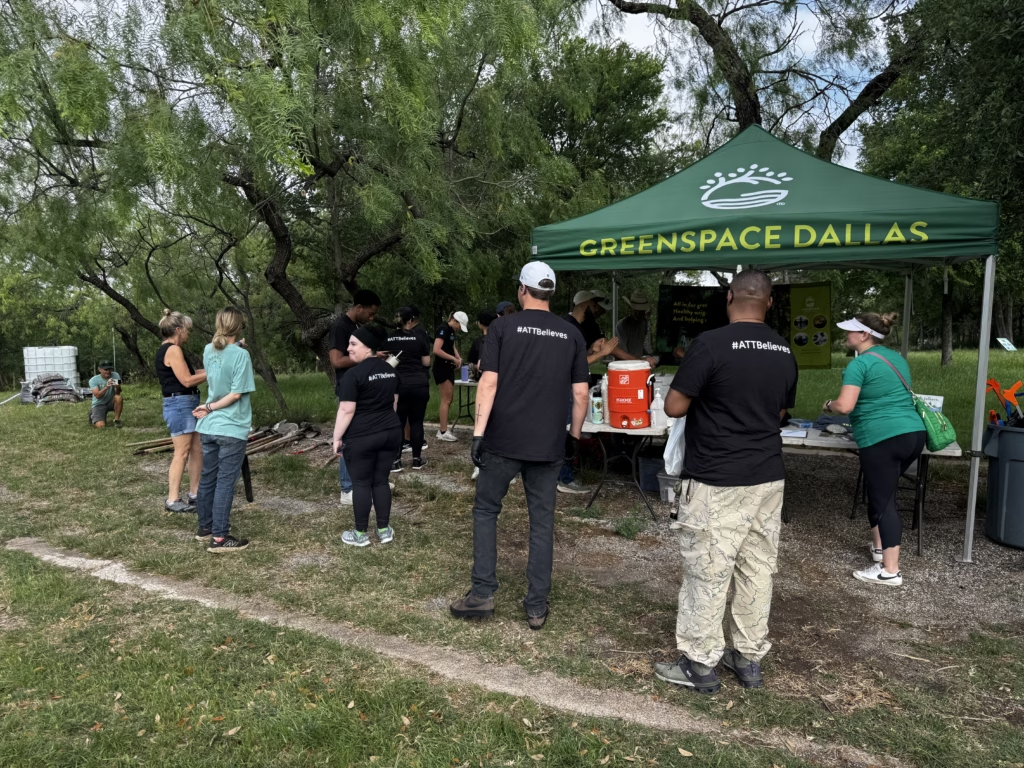
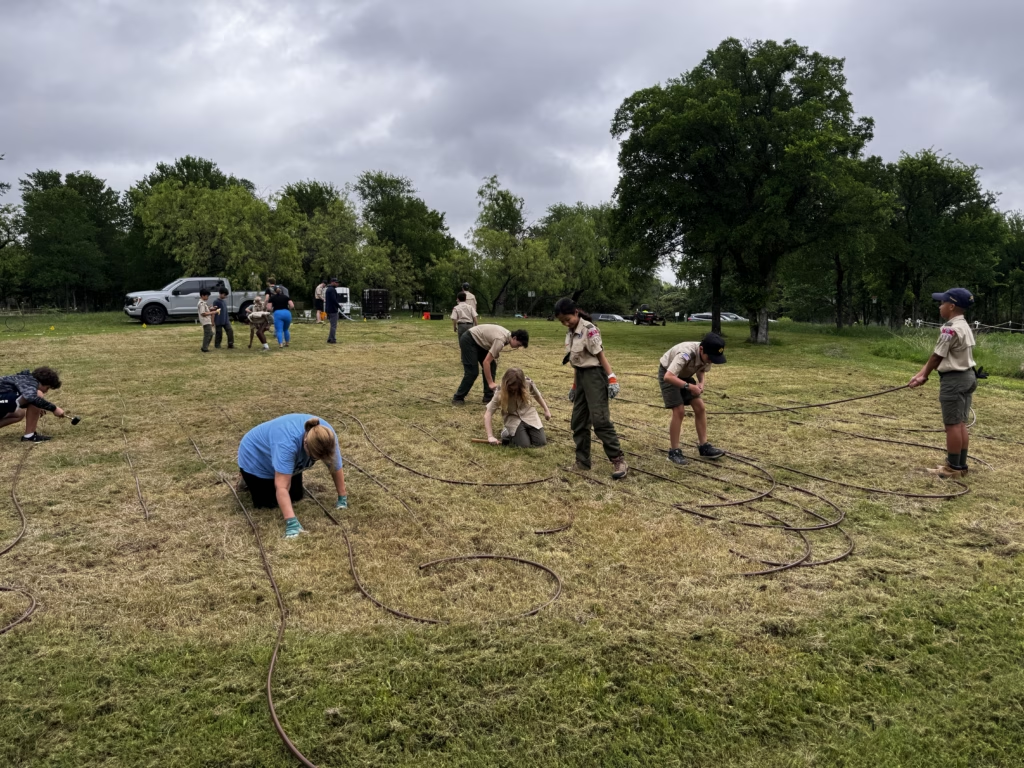
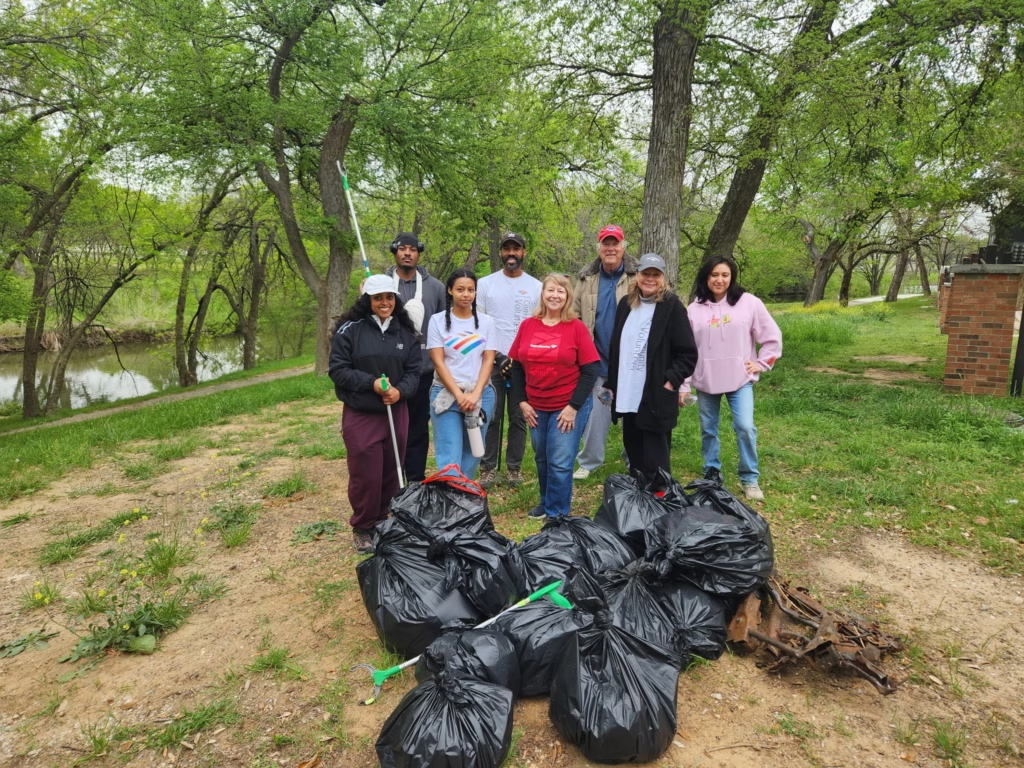
Volunteers at Bachman Greenbelt
7. What is one major misconception people have about how our local green spaces are funded, maintained, and protected?
One thing that surprises people is just how much goes into what looks like a simple project. A trail that looks like it’s just a sidewalk might require an environmental review, a floodplain analysis, design work, engineering, and construction, sometimes ten or more distinct steps between an idea sketched on a napkin and something actually built. Some of that is municipal bureaucracy, and some of it is just what doing things correctly requires. A Friends group can sometimes speed that up by hiring vendors directly or covering the cost of a specific portion of the work, which lets you skip a step or two. Otherwise, it takes time.
The other misconception is thinking that identifying available funding is step one. In reality, the list of needs at any given park is so long that if you’re not shovel-ready the moment a bond passes or other funding source is secured, your project probably isn’t getting included that time. If you’re counting on capital bond dollars from the city, you need to be well prepared and actively lobbying to get your project onto that final list ahead of time. Otherwise, you’re waiting another four or five years for the next cycle.
8. What does it take to build and sustain momentum in a community-led nonprofit, and what are some of the biggest hurdles these groups face?
Momentum comes from a core group of people who take initiative without waiting to be asked, which matters even more in a volunteer organization. The work only moves forward through consistency, and for us that consistency mostly looks like persistence: constantly communicating with the people who can make things happen, making sure everyone understands what’s going on, what’s needed, and who’s responsible for what. A lot of it is just monitoring and instigating conversations between different groups and city departments that wouldn’t otherwise be talking.
The biggest hurdle is that in a volunteer group, everyone has a job, a family, other obligations, so if people are waiting around for someone to assign them a task, momentum dies. While strong leaders willing to get their hands dirty are crucial it also helps enormously to have creative, easygoing, talkative people around, the ones who keep ideas bubbling and help shape a vision, even if they’re never the ones to organize a clean-up or lobby an elected official. Personally, I like to see groups dream big rather than focus on small, incremental tasks. If you aim for the dream scenario, you’ll always land somewhere between where you started and where you were reaching – that’s real progress no matter what.
9. For a trail user or outdoor lover who wants to take the next step beyond just recreating outdoors, what are the different ways they can get involved with a local Friends organization?
The most visible entry point is volunteering at cleanups, plantings, or maintenance days, which is a great way to meet people and see the work firsthand. Beyond that, groups need people who can help with fundraising and grant writing, social media and communications, event planning, and simple administrative support. For people who want to go deeper, most Friends groups have a board or committee structure where you can help set strategy and lead advocacy efforts. Even just becoming a dues-paying or donating member and showing up to public meetings when it matters adds real weight to what the group can accomplish.
10. As North Texas continues to experience explosive growth over the next decade, what role do you think local Friends groups will play in protecting and preserving nature in Dallas and beyond? And finally, where do you want to see the Bachman area going into the future?
More people means more use, and more use means more wear and tear, sometimes beyond what regular maintenance and cleaning can keep up with. When something actually breaks or needs replacing, it doesn’t always get fixed within the week through a routine service request. It can get put on a list that has to work its way toward bond allocation, private donation, or grant funding, often bundled with other projects, and that pipeline moves far more slowly. That’s exactly why ongoing care matters so much along the way. Friends groups provide that extra layer that keeps things from degrading past what mowing, street sweeping, and trash removal can cover on their own.
Beyond maintenance, I think it matters just as much that our parks keep some personality as the region grows. We don’t want every park looking the same, or every playground being a cookie-cutter design. We want different kinds of events, and we want parks that actually reflect the communities living around them and using them most. That uniqueness comes from people, not from the parks department. So as North Texas keeps growing, it’s important that we bring new neighbors into this work, and that the support behind our Friends groups grows at the same pace as the population moving in.
It’s also important for organizations like ours to keep looking to the future. What do we want these spaces that matter so much to us, to look like five, ten or twenty years down the road? One important goal is to create a Texas Native Plant Arboretum in the Bachman Greenbelt, providing both recreation and educational opportunities for the park’s users. Connectivity is also a critical need. Unlike the White Rock Lake area, Bachman is isolated from the broader trail network, so we’re looking into ways to connect to the Campion Trail to the west, or Northhaven Trail to the north. Also, the area is surrounded by concrete, with Love Field to the south and the DART station to the west, so finding ways to add shade through structures or trees will be critical to helping alleviate the heat island effect.
So while we are proud of the work we’ve been able to accomplish, our dreams are still bigger!
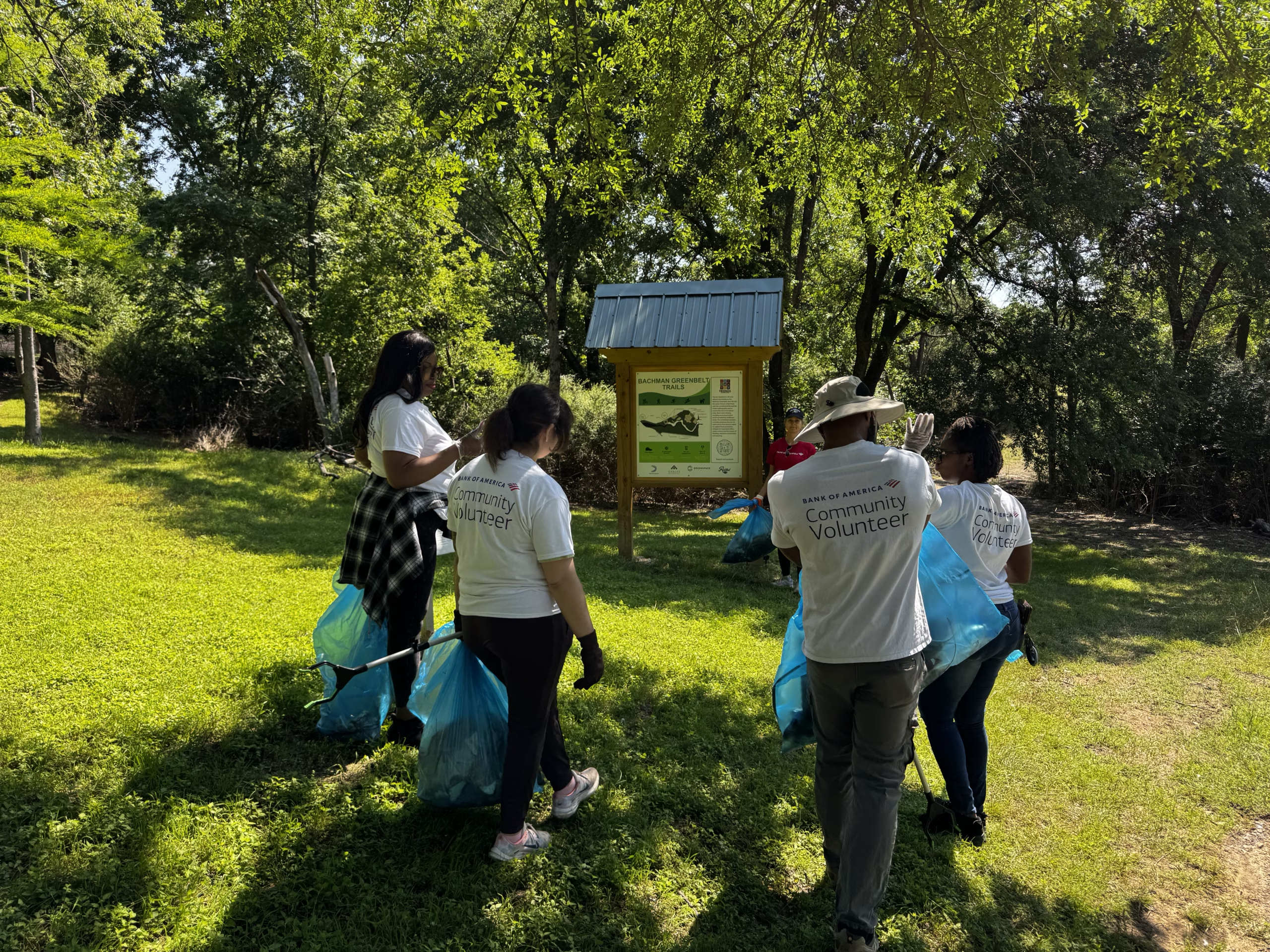
(Note, I am a board member with the Friends of Bachman Lake)
Thank you to Ryan for talking to North Texas Trails about the importance of Friends groups, what they do, and why they matter to outdoor recreation enthusiasts!

Jeff
A long time native of North Texas, I love to hike and mountain bike in my spare time. I’m always looking for some place new to explore, which is why I’m doing this site.