Ten Questions with Greenspace Dallas
Restoring waterways and community along the Trinity River
“When we restore a green space, we’re not just creating a trail. We’re investing in the ecological and social health of the city, and hopefully inspiring more neighbors to come together to see what green space in their community can be reclaimed and restored. “
About Greenspace Dallas
Greenspace Dallas works to clean up neglected green spaces around the Trinity River watershed, and creates beautiful parks promoting nature education, outdoor recreation and establishing habitat for native wildlife to thrive.
As part of our new series, “Ten Questions with”, Casey Cutler, CEO of Greenspace Dallas, has answered ten questions about the organization, the state of the Trinity River, the challenges that organizations like hers face in enabling their mission, and her hope and optimism for the future.
To read more about Greenspace Dallas, click here for a spotlight on the organization!
The Conversation
1. Greenspace Dallas has been working along the Trinity River Corridor since 2004. What have you learned about the Trinity in those two decades that you wish more Dallas residents truly understood?
I think the biggest thing we’ve learned is that the Trinity is incredibly resilient. People often see the river as something that is dirty, dangerous, or something we need to control, but the Trinity is a living system that is constantly working to recover. I remember learning about how Dallas literally moved the Trinity River in order to establish the city, and since then the river continues to prove it’s strength by flooding and taking back it’s space during the rainy seasons. I don’t blame the Trinity for reminding us that we should be working with it, not against it as we continue to develop along it’s path.
Through our programs at Greenspace Dallas, both our youth program and our water mapping projects, I have really learned that the Trinity isn’t just “the river.” It’s an entire network of waterways and natural areas, and how we treat those places directly affects the health of our city. Our source of water that comes out of our faucets can be seen all throughout North Texas.
2. Over twenty years you’ve turned illegal dump sites like Frasier Dam into some incredibly restored green spaces. What’s the win you’re proudest of, and what’s been the hardest fight along the way?
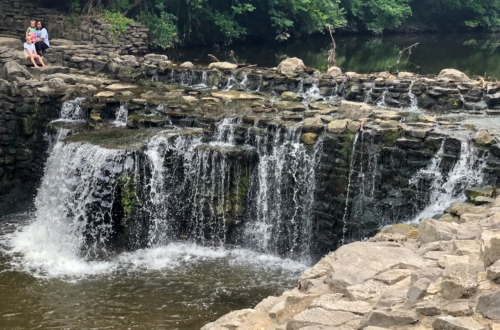
Frasier Dam Recreation Area is definitely a hidden gem that Greenspace Dallas can really be proud of restoring. Once an illegal dumpsite, now an amazing recreation area, demonstrates what is possible when you refuse to accept that a neglected place has to stay neglected.
The most rewarding part isn’t necessarily removing a particular amount of trash or completing a particular project. It’s seeing the transformation from a place people dumped things into a place people want to visit, explore, and take care of. When people begin to see a place as valuable, their relationship with it changes.
The hardest fight has been changing perceptions. We see people misuse this green space to this day by filling up the trash cans with household trash, leaving their beer bottles behind, abandoning cars in the parking lot. Restoration takes time, and it’s easy for people to look at a piece of land and see only the problems that are there today. We’re constantly trying to get people to see what that place can become—and to understand that restoring natural systems isn’t a one-time cleanup. It requires long-term stewardship, and our volunteer program that facilitates Saturday cleanups really contributes to that mission.
3. A lot of your work involves taking places that have been neglected, littered with debris, or overrun with invasive species and turning them back into functioning natural areas. What does that restoration process actually look like on the ground, and what separates a successful project from a failed one?
Restoration is much more than picking up trash.
It starts with understanding the site—what the land looked like historically, what is happening there today, what invasive species are present, how water moves through the site, what wildlife is using it, and what the surrounding community needs.
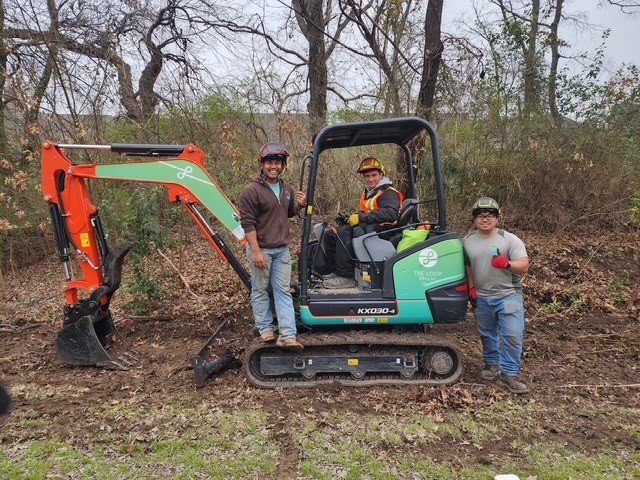
Then comes the hard physical work: removing trash and debris, controlling invasive plants, protecting existing native vegetation, restoring native plants, improving trails, and sometimes addressing erosion or other environmental problems.
But the biggest difference between a successful project and a failed one is what happens after the ribbon cutting. A restored site needs stewardship. Invasive species come back. Trash comes back. Trails need maintenance. Plants need time to establish.
We believe restoration has to be thought of as a long-term relationship with a place, not a one-day project. Connecting to the community, and developing future environmental stewards is key.
4. Your work involves both restoring habitat and making these places accessible through trails, docks, and other amenities. What value is there in restoration beyond outdoor recreation?
Recreation is important, but it’s really only one piece of the value.
Healthy natural areas improve water quality, provide habitat for wildlife, reduce the impacts of flooding, support biodiversity, help mitigate extreme heat, and give people access to nature in an increasingly urban environment.
There is also a human value that is harder to measure. People need places where they can walk, breathe, explore, and feel connected to where they live. Natural spaces can become places for education, community building, physical activity, and even workforce development.
When we restore a green space, we’re not just creating a trail. We’re investing in the ecological and social health of the city, and hopefully inspiring more neighbors to come together to see what green space in their community can be reclaimed and restored.
5. The Trinity’s reputation historically has always been about flooding and pollution. Is that view changing, and what would it take for people to see the river as an asset instead of a problem to manage?
I do think the perception is changing, and I think that’s one of the most exciting things happening in Dallas. I get to work with volunteers and youth regularly where they have developed their own personal investment into taking care of the Trinity. We even took a group of high school students who have been working with us at the top of the Trinity River, all the way down to Galveston at the bottom of the river to see where the river meets the ocean. This was an incredible opportunity to reinforce just how impactful the Trinity River is.
We’re seeing more people recognize that the Trinity is an incredible natural asset. But changing the perception requires people to actually experience it. It’s difficult to value something you’ve never been able to access or haven’t seen in a positive context.
That’s why restoration, trails, education, and recreation are so important. When someone walks along a restored trail, sees wildlife, watches birds, or brings their child into a natural area, the Trinity becomes something personal.
Ultimately, I think we need to move from a mindset of managing the Trinity as a problem to investing in it as an asset. Flooding and water quality will always be realities we have to address, but a healthy watershed is part of the solution—not the problem.
6. You’ve removed more than a million pounds of trash and debris from the waterways. What’s the strangest thing you’ve found, and what does all that waste say about how we treat the river?
We’ve found just about everything you can imagine—from tires and appliances to furniture, shopping carts, construction debris, and all kinds of things that absolutely should not be in a waterway.
But honestly, after removing more than a million pounds of trash, the strangest thing isn’t one particular item. It’s the sheer volume.
It tells us that for a long time, people viewed the Trinity and its surrounding natural areas as places where things could disappear. If we don’t see a place as valuable, it’s much easier to treat it like a dumping ground.
The good news is that we’re seeing the opposite happen, too. When people participate in cleanups and restoration, they begin to feel ownership. They stop seeing the river as “somewhere else” and start seeing it as part of their community.
More importantly, it is a constant reminder of the “stuff” we are buying or consuming and how long it lasts in the environment. I can’t tell you how shocked people are at the amount of Styrofoam they find and how much it breaks down into tiny pieces.
7. Volunteers are critical to how you get this work done. What is the impact from that volunteerism, both to Greenspace Dallas and to the volunteers themselves?
Our volunteers are absolutely essential. They allow us to accomplish work at a scale that we couldn’t achieve with staff alone, but their impact goes far beyond the number of hours or pounds of trash collected.
For Greenspace Dallas, volunteers give us capacity. But for the volunteers, I think the experience can change their relationship with their own city.
Someone might come out thinking they’re just going to pick up trash for a few hours. Then they discover a trail, learn about native plants, see wildlife, meet their neighbors, and realize that they can actually make a tangible difference.
That’s incredibly powerful. We’re not just asking people to volunteer for the environment. We’re helping people become environmental stewards.
8. The Trinity River Crew, a collaboration with the Trinity Park Conservancy, combines conservation work with paid employment, education and leadership development skills. How do you see that paying off in the present, and into the future?
The Trinity River Crew is exciting because it connects environmental restoration with opportunity.
These young people aren’t just learning about conservation in a classroom. They’re getting paid to do real work—restoring trails, removing invasive species, improving natural areas, and contributing to projects that have a visible impact on their community.
At the same time, they’re developing skills around leadership, teamwork, responsibility, and employment. Those skills have value regardless of whether they ultimately pursue a career in conservation.
In the short term, we’re creating a stronger workforce and getting important restoration work done. In the long term, we’re helping develop a generation of people who understand that environmental work can be a career and that they have a role in shaping the future of their communities.
9. Looking at the Trinity River Corridor today, where do you see the greatest opportunity for restoration and recreation over the next ten years, and where are you most concerned that we could lose ground?
I think the greatest opportunity is to connect the individual pieces of the Trinity corridor into a much larger network of restored natural areas and accessible trails.
There are still significant areas of Dallas that have natural assets but aren’t being fully utilized or cared for. If we can identify those spaces, understand who owns them, determine what restoration they need, and connect them through trails and other improvements, we can create a much more meaningful green infrastructure network.
My biggest concern is that we focus too much on individual projects without thinking about long-term stewardship and connectivity. We can build a beautiful trail or restore one site, but if the surrounding ecosystem continues to deteriorate, we’re missing the bigger opportunity.
The next ten years need to be about thinking at the watershed scale while still doing the work at the ground level.
10. Protecting a watershed requirees a whole network of allies, from other nonprofits to the city. How have partnerships shaped what Greenspace Dallas has been able to accomplish, and where do you need to build stronger bridges moving forward?
We couldn’t do this work alone. The Trinity is too large and too interconnected for any one organization to solve every problem.
Our partnerships have allowed us to combine resources, expertise, volunteers, funding, education, workforce development, and access to places that we couldn’t address independently. Working alongside organizations, city partners, conservation groups, schools, foundations, and community members makes the work much more effective.
Going forward, I think we need even stronger coordination across those organizations. There are enormous opportunities if we can align restoration, recreation, workforce development, water quality, parks, and community investment rather than treating them as separate issues.
The Trinity doesn’t recognize organizational boundaries, property lines, or departmental responsibilities. If we want to create a healthy river corridor, we have to work across those boundaries too.
Conclusion
Thanks to Casey Cutler for taking the time to answer Ten Questions, and for all the work she and Greenspace Dallas do to support nature and green spaces in Dallas.
Again, if you’d like to learn more about Greenspace Dallas, click here for a spotlight on the organization!

Jeff
A long time native of North Texas, I love to hike and mountain bike in my spare time. I’m always looking for some place new to explore, which is why I’m doing this site.